TextShift
Verify, transform, and protect your content from a single dashboard

About TextShift
TextShift functions as a centralized dashboard designed to evaluate content origin, rewrite robotic paragraphs, and identify potential source duplication.
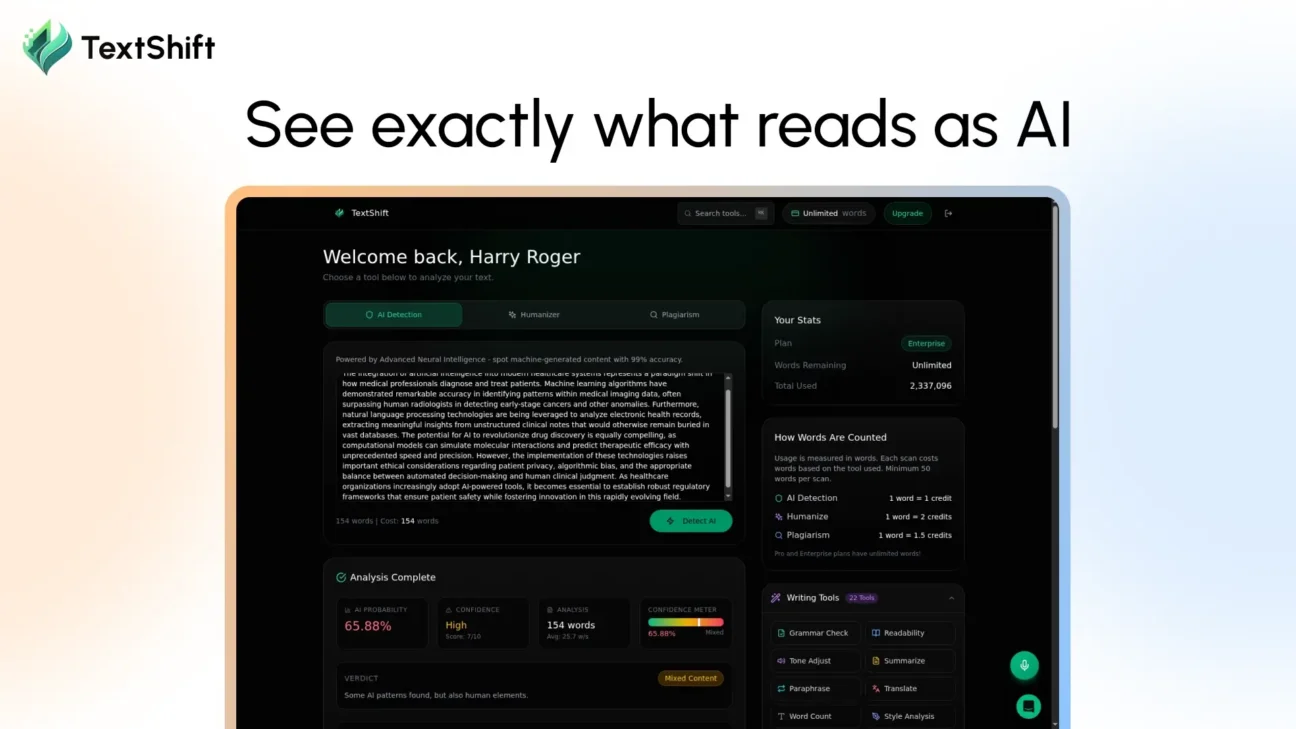
The core AI detector assesses submissions with a reported sentence-by-sentence breakdown and interactive color-coded heat maps.
Instead of displaying a simple overall percentage, the interface highlights specific text segments so you can see precisely which lines triggered the detection metrics.
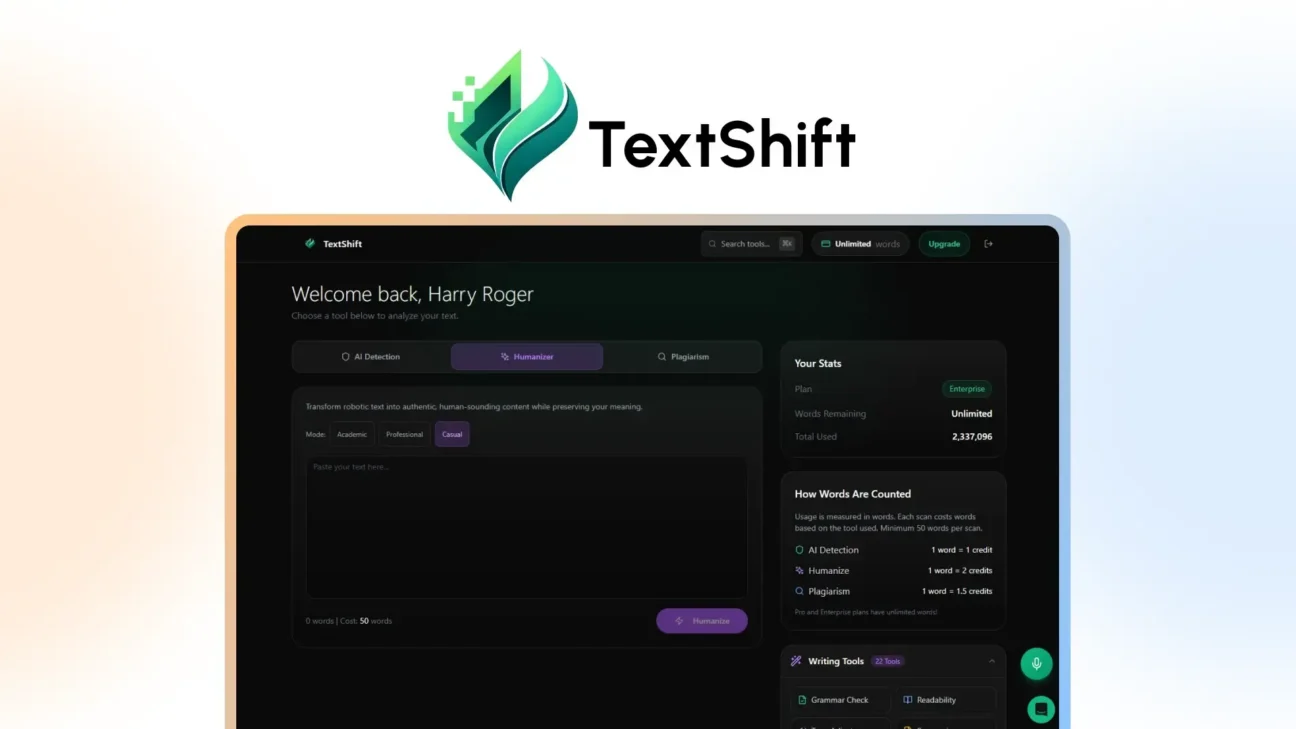
To address flagged sections, the built-in humanizer offers three distinct operational profiles: Academic, Professional, and Casual modes.
These transformation options are engineered to adjust phrasing structure and readability indicators while preserving the foundational message of your document.
For similarity verification, the platform cross-references content against an index of over 987,000 online and scholarly databases, including Google Scholar and CrossRef.
The resulting reports identify direct matches, track paraphrased text variations through fuzzy matching, and generate exportable PDF summaries.
Beyond evaluation and rewriting, users gain access to a larger sidebar suite containing 22 integrated utility modules for comprehensive text management.
These supplementary tools handle standard optimization tasks such as detailed grammar correction, reading ease scores, automated summarizing, and citation formatting.
The ecosystem operates entirely as a browser-accessible web application, making it straightforward to analyze or refine drafts without local software installations.
Key Features
Sentence-level AI heat maps
Three AI humanization modes
987,000+ source plagiarism scanner
22 built-in writing tools
Exportable PDF similarity reports
- Active Deal
- Launched 3 weeks ago
You Might Also Like
No deal available